In these times of COVID-19, we miss our wonderful volunteers. Your generosity and dedication to ACC makes ACC what it is today. While the administrative center is closed and onsite events are cancelled, we still need our valued volunteers. If you would like to continue helping ACC while you are sheltering at home, we have several opportunities that might interest you that are listed below.
SCSEP needs someone to
Help make phone calls to participants who are at home now and can help with mandatory online training
Help train participants on smart phone and computer basics
TEAM/CHANGES needs
Volunteers who speak other languages to help translate for non-English speaking clients (the goal would be to have a dedicated group that could be called upon when needed)
Volunteers (ESL focused) who are part of other groups and could get materials out about utilities assistance
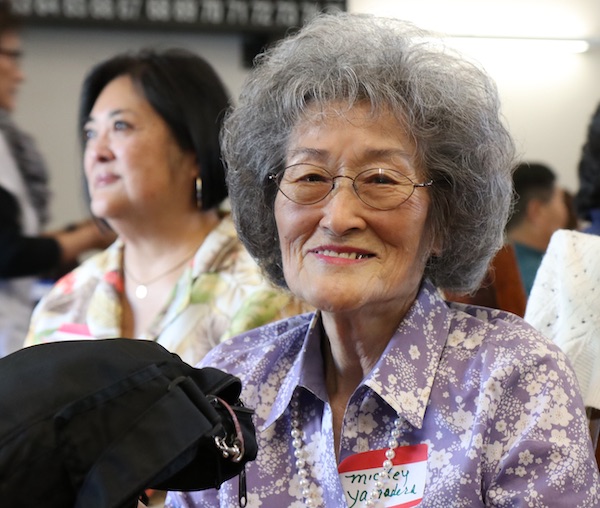
Mickey Yamadera
Mickey Yamadera has come full circle at ACC. This remarkable volunteer who mobilized people, resources, and goodwill for ACC for decades is now living in ACC’s “community of caring” that she helped create. Read Mickey’s story.
Marketing needs help with
Editorial writing for the print and online newsletters
Production assistance for online streaming content
ACC Needs Clerical Support to
Help take and type up meeting minutes
Volunteers Needed to Make Reassurance Calls to
GT IL Residents
Rides participants
If you are interested in helping with any of these opportunities, please contact Dave Lin at dlin@accsv.org or (916) 394-6399 x 143. As always, thank you for your generous support of ACC!
ACC has served the Sacramento community since the early 1970s. Long on vision and strong on planning, ACC has enjoyed tremendous growth decade after decade. Next year, ACC will celebrate its 50-year anniversary. But its work doesn’t stop there.
On August 18, 2020, ACC rolled out its 2021-2025 Strategic Plan at a virtual town hall meeting attended by approximately 80 ACC staff, members of the Board, volunteers, and key stakeholders. This was the culmination of a one-day strategic planning retreat held last year on August 17th and twelve meetings of the ACC Executive Committee and Executive Management team since then.
Attendees of the strategic planning retreat worked collaboratively to develop the four key goals and then the ACC Executive Team and the Executive Committee developed the action plan and guiding principles to achieve them. The ACC Board of Directors approved the 2021-2025 Strategic Plan at the August 31, 2020 Board meeting with the theme of Honoring the Past – Transforming for the Future. The Goals are:
Goal #1: To be a premier provider of community and residential services focused on creating meaningful life experiences for older adults and their families
Goal #2: To develop a business model that spurs program growth and charitable giving, while ensuring high levels of quality services and financial stability
Goal #3: To be the preferred employer of an engaged workforce by supporting professional development and the collective contributions of our staff
Goal #4: To cultivate an organization-wide culture where volunteers and staff work hand-in-hand to fulfill the vision and mission of ACC Senior Services
The COVID-19 pandemic and the country’s racial issues played a role in developing these goals. They have broadened our view of health and safety and our responsibilities to the greater community. ACC will remain clear-eyed and proactive about handling these and other exigencies that will come our way.
As part of its continuum of care strategy, ACC invested in assisted living with the construction of ACC Maple Tree Village, shown here.
The 2021-2025 Strategic Plan will be guided by the following principles:
Emphasizing Diversity, Equity and Inclusion
Ensuring Financial Sustainability
Reshaping Services & Programs with Technology
Reimagining Volunteer Engagement
Enhancing Social Interaction
The Five-Year Strategic Plan lists specific strategies under each goal. These include:
Creating a holistic environment at ACC where clients, residents, families, volunteers and staff have opportunities to nurture their body, mind, and spirit
Promoting ACC in the community as a thought leader and trusted expert on aging issues and best practices
Increasing transportation services to older adults living in ACC residential communities as well as those living at home
Developing a plan to remodel the Care Center and/or build an additional post-acute facility to maintain ACC’s viability and improve the level of resident privacy and self-direction
Evaluating the efficacy of ACC adding or collaborating on affordable housing options for seniors
Continuing to integrate services throughout ACC, eliminate siloed thinking, and promote teamwork across program lines
Developing a robust Intergenerational Program, engaging the local community throughout all ACC divisions to enhance community service and connectedness
Establishing a viable fundraising and endowment plan to sustain current programs and enable future growth of ACC
Expanding the Career Advancement Program (CAP) to include all employees and develop additional modules to meet employee development needs
Developing and scaling ACC’s unique “Community of Caring” brand throughout the community
Exploring and developing options to attract and retain high quality staff
Cultivating an ACC Core Value-driven workforce including both staff and volunteers.
Promoting communication, mutual understanding, and respect among staff and volunteers
Each of these strategies (and there are many more) has an action plan and owners assigned to them. ACC’s Executive Management Team will report quarterly to the ACC Board of Directors on the progress of the strategies and action plans. The Strategic Plan will be reviewed annually, adjustments made as needed, and shared with the ACC Community.
Amidst all this, ACC is prepared to adapt to future changes in the marketplace. The number of older adults and their life expectancy will continue to rise, driving more demand for assisted-living, memory care, and in-home services. More social services and life-long learning programs will be needed too.
The Strategic Plan also calls for developing a strong culture of philanthropy and business innovation. The Big Day of Giving held in May raised a record-breaking $160,000, a clear indicator that the community is passionate about what ACC does. Jean Shiomoto, our Board Chair, believes that the challenge in the next five years is to create more opportunities for philanthropic donations and creating endowments that will lead to new, impactful programs for seniors.
ACC’s stature in the community has risen over five decades. People and other institutions will continue to seek ACC’s views on a range of healthcare and social issues, especially those that affect underserved seniors and people of color. Because of this, ACC needs to move in the direction of diversity, equity, and inclusion. We are no longer just serving the Asian community.
ACC is already seeing a more diverse workforce and client base, but there is more work to be done. The transformation will continue in the next five years.
The Volunteer Appreciation Luncheon has been a regular annual event held by ACC Senior Services for many years. This has traditionally been an opportunity for ACC to give back to our volunteers and thank them for all the service they provide to both ACC and our community.
Normally this event is held in April of each year, but due to COVID-19 and the concern for the health and safety of our volunteers and staff, it had to be postponed. We still wanted to show our appreciation to our volunteers, however, and our Volunteer Development Committee came up with the great idea of having a drive-through event to have people come pick up an insulated lunch bag filled with a fresh Vietnamese sandwich, drink, ramen, cookies, cloth face mask and some appreciation cards.
Nancy Iseri places items into bags.
Virginia and Linda perform quality control.
Cynthia Huang places Vietnamese bánh mì sandwiches into lunch bags.
Board Vice Chair Chiang Wang loads his car before starting on his delivery route.
Plans were well under way to do this, with over 150 volunteers signed up, and the logistics were almost complete. As the pandemic worsened in the Sacramento community and at ACC, the staging of the event was looking to become more and more difficult. Volunteers would not be allowed to assist staff with the event, and staff from other ACC facilities would no longer be available to assist. With these challenges in mind, the Committee came up with the great idea to do a lunch delivery instead of a pick-up.
Gene Kato joined other staff and volunteers to pack 150 lunches for door-to-door delivery.
With the help of the Volunteer Development Committee, ACC Rides and ACC management staff, in two short weeks a plan was developed to have 15 volunteer and staff drivers deliver all 150 or more lunches to our volunteers all over Sacramento County. It was a rewarding experience for all of us involved with the event, and the feedback from our volunteers was overwhelmingly positive. We are hopeful we’ll be able to show our appreciation for all our volunteers again in the near future, and we miss all of them very much!
ACC President and CEO Darrick Lam delivers lunch to Board member Titus Toyama in appreciation for his service.
By Darrick Lam, ACC President/CEO and Jean Shiomoto, ACC Chair of the Board
Throughout the COVID-19 pandemic, the ACC Care Center has worked diligently to follow the evolving guidance from local, state, and federal resources in order to maintain the safety and health of our valued residents and staff. ACC maintains robust infection control practices, a universal masking requirement, daily symptom screenings, and strict personal protective equipment (PPE) requirements. ACC also implemented visitation restrictions in accordance with regulatory guidance to prevent the spread of COVID-19.
Unfortunately, with COVID-19 numbers surging in Sacramento County and throughout California, ACC Care Center had its first resident with COVID-19 positive results in July. Subsequent to this, multiple residents and staff members also tested positive. We notified our residents, their family members, responsible parties, and primary physicians. We also notified our staff members and made a public statement on the ACC website on July 24. The residents who tested positive were safely transferred out to the hospital for follow-up. The staff members self-isolated at home under guidance from county health officials.
No new cases have been reported at the Care Center since August 18, 2020, but intensive testing continues per County healthy guidelines. Along with the rest of the nation, ACC’s fight against COVID-19 will extend well into the future. Rest assured, our procedures for prevention and handling the recent surge are as strong as ever thanks to the leadership of our Medical Director, Dr. Scott Stringer. In fact, ACC has appointed Dr. Stringer to also be the Medical Director for Assisted Living at ACC Maple Tree Village and ACC Greenhaven Terrace. Your moral support and donations have helped Dr. Stringer and his team fight this unseen, uncanny enemy.
The Community Room was used to prepare 150 lunches for delivery to the homes of ACC volunteers.
In the midst of all this, ACC has experienced many uplifting moments. To show our appreciation to our valued volunteers ACC held a Volunteer Lunch Delivery Event in place of the Annual Volunteer Appreciation Luncheon that is normally held in May. We delivered 150 lunches to volunteers at their homes in mid-July. Thank you to all the staff and, yes, volunteers, who made ACC’s Volunteer Lunch Delivery Event a success. Read Volunteer Appreciation story.
On Friday, August 14, ACC Care Center resident Mrs. Chang Hou celebrated her 101st birthday. With the help of Activity Director Debbie Williams, her family made a “window visit,” standing outside in 102-degree heat to sing Happy Birthday, hold up a giant sign, and talk to their mom through the glass. Mrs. Hou, whom her daughter Emily Chapman describes as strong and feisty, was visibly moved, as were the family members and staff who were present.
Minnie received a Certificate of Recognition from CA Assemblymember JimCooper
Another centenarian, Maple Tree Village (MTV) resident Minnie Iseri, turned 100 years old. MTV staff arranged for her to celebrate her birthday with family and friends online via Zoom on August 29th. Family from across the country and from Japan shared in this special celebration for Minnie. Minnie was amazed we could “call” everyone like that and she could see everyone. Minnie was able to converse with her family from Japan too. It was cute to hear one family member say they would take a small virtual slice of cake. Don’t we all say that in person! Sacramento City Councilmember Rick Jennings even presented her a key to the city. Happy Birthday, Minnie! Read Minnie’s story.
The paradox of social distancing is that people are becoming closer. Their feelings for each other and their drive to connect have become more important as we change how we interact during the pandemic. At ACC, we have seen the best of our core human values emerge as people find new ways to connect with each other.
This Fall, ACC Programs is launching an initial offering of online classes and events. Many seniors embrace this, but according to our recent survey, 48% of respondents were “not sure” if they would participate in a new online format. We saw at the recent ACC telethon, a new level of energy and creativity is building around online programs among staff and volunteers alike. We also know that not everyone can connect online. Stay tuned as we work on content, and learning and connectivity strategies.
ACC was scheduled to roll out its Five-Year Strategic Plan before the pandemic changed everything. This plan was the result of a retreat we had in August 2019 attended by more than 60 ACC volunteers including Board and committee members. Since then, we have reset the timeline and adjusted some of our goals to reflect the new normal caused by COVID-19.
In closing, we want to thank the ACC Community for remaining diligent against COVID-19, helping those adversely affected, and remaining optimistic that we will emerge from the pandemic stronger and better.
By Darrick Lam, President and CEO, ACC Senior Services
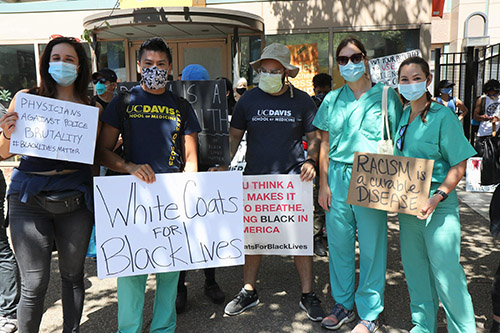
Black lives matter. The senseless killing of George Floyd and others by the police shows that bigotry and discrimination against African Americans will keep growing unless we step outside of our comfort zone and take real action.
I’ve talked to many ACC employees who are outraged, hurt, and threatened by this latest round of police brutality, especially those who have experienced unbridled prejudice in the past. I believe ACC needs to explore ways to break its silence and join the worldwide community to condemn the killings of George Floyd, Breonna Taylor, Ahmaud Arbery and other African Americans. We cannot continue to tolerate the deaths that have shocked the nation’s conscience or the bigotry and discrimination that foster it.
Today, many people, including victims of violence, are afraid to call the police, fearing that more harm than good will result. As a trained social worker, I agree with the view that policing alone cannot solve the underlying causes of social problems.
Thousands of protesters marched in downtown Sacramento on June 6, 2020. More than 750 cities in U.S. held protests since the killing of George Floyd.
You might wonder what this has to do with our mission to care for seniors. Seniors, too, can be victims of discrimination, violence, and abuse. If we focus only on what we consider “our business,” then it becomes easier for destructive forces to divide and harm us. When our neighbors are fighting for social justice, we must step in and support their fight to be treated with the same dignity and respect due to every person. Protests around the world in the wake of Mr. Floyd’s death are a catalyst for populist change and we have an opportunity to be part of this change.
I fully agree with an article published by TIME Magazine on June 9th that “lasting change won’t happen without actively deconstructing our beliefs about race…in order to make social and economic change in a society rife with institutional racism, it’s not enough to not be racist, but rather people need to be actively anti-racist. For many people learning how to be a helpful ally, the best place to start is educating themselves and listening.”
We often use our own culture and values as a measuring stick to determine how and why we treat people the way we do. We forget to ask ourselves, “How does this person want to be treated, not based on my values and culture, but theirs?” Or, “Do I even know their culture and values well enough to know if I’m treating them with respect?” These questions are the basis of ethical human interaction. We all need to learn, to grow, and to fully appreciate other people.
We can begin our fight for social justice by asking ourselves these questions:
How can we help African Americans and other communities of color obtain justice?
What can we do to reduce implicit biases, racial injustice, and inequality in our institutions, not just law enforcement?
How can we protect the rights of all our citizens regardless of race, color, ancestry, religion, sexual orientation, age, or country of origin?
What can we do to invest in our community to educate our young and old, fight racism, and give would-be victims new life-changing opportunities?
It’s time for ACC to take real action and join our neighbors in support of causes that address racial violence in this country. Please let me know if you would like to join me in this long overdue fight for social justice. For those who are interested in a dialogue, please email your comments or questions to info@accsv.org.
As you
walk through the glass doors into the lobby, you’re greeted by stunning artwork
from famed San Francisco artist William Gatewood (1943-1994). Large images of kimonos and Japanese screens,
enhanced by splashes of gold and silver leaf, are prominently displayed on the
walls. Walk further into the building
and you can take a meandering stroll along the Sacramento River Delta, courtesy
of landscape paintings by legendary local artist and former Sacramento City
College art professor Gregory Kondos.
No, you’re not at the Crocker Art Museum. You’re visiting ACC Maple Tree Village, the
newest residential community that will provide Assisted Living and Memory Care
services to older adults. Located in the
Pocket-Greenhaven neighborhood, Maple Tree Village will open its doors in early
2020.
I recently
sat down with Moni Van Camp-Kondos, Gregory’s wife. She is also the sister of William Gatewood.
Moni led the effort to permanently house a vast collection of fine art from
renowned artists at Maple Tree Village.
She took an active role in selecting the artists, the artwork and the
specific placement of each piece. The
Kondos family donated 11 limited edition and signed prints. Moni placed most of her husband’s paintings
in the “Blue Jay Neighborhood,” located in the assisted living area – a most
appropriate setting since the color blue is a signature feature in most of
Kondos’ pieces. “Gregory is very
impressed with the design of the Maple Tree Village community. He can’t stop
talking about it,” says Moni. “The river
has been a major part of Gregory’s life and he loves that residents will be
surrounded by familiar Delta images on a daily basis.”
Gregory’s
work is included in permanent collections around the world, so ACC is very
appreciative of this generous donation from the Kondos family. I asked Moni why the family made such a
generous donation to Maple Tree Village.
“I worked with Scott Okamoto (Marketing Manager for Maple Tree) to
display a few art pieces at Monroe Manor.
When Scott proposed a similar, but larger project for Maple Tree
Village, I was very excited to make this happen. It’s a great venue to show off all of this
wonderful art.”
I recently
went on a walking tour of Maple Tree Village with Scott. His pride about the modern, yet functional
facility was evident as we walked and talked.
The community is thoughtfully designed and built around a
“person-centered program” philosophy.
There are 72 apartments in the four assisted living “neighborhoods” and
30 in the memory care neighborhood. Each
apartment has state-of-the-art lighting and adaptive living features. Each neighborhood has its own “just like
home” dining and activity centers, with lots of windows allowing views of the
lush landscaped courtyards filled with water features and native plants. Colorful, comfortable furnishings and local
nature images avoid the stereotypical “institutional” look common in many
residential living facilities. This
unique, nurturing environment is a place I’d consider for my mother if she
needed such services. And how fortunate
the residents are to live inside an art museum!
Down the
road, Scott anticipates acquiring more artwork and envisions the possibility of
self-guided art tours. With the help of Maple Tree Village staff, Moni will
create informative signage to accompany each piece of art. Moni told me many of the artists are local or
have roots in Northern California. There
are 17 pieces from William Gatewood. She
adds, “My brother Billy passed away 25 years ago. To see his Asian-inspired art displayed in this
beautiful building is a great tribute to him.”
Lotus-inspired
artwork from Chinese artist, Shimo, hangs in the Welcome Center. Originally from Shanghai, Shimo moved to
Sacramento in 2003 and is a good friend of Gregory Kondos. His Midtown gallery, Shimo Center for the
Arts, is dedicated to promoting local artists. There is also original artwork
from Oakland-born artist Fred Uhl Ball, whose parents taught art classes at
Mills College.
Says Scott, “Our residents, their families, and the
greater Sacramento community will have this extraordinary opportunity to enjoy
this special art collection for many years to come.” Moni couldn’t agree
more. “I want everyone who passes
through Maple Tree to admire the beauty around them, inside and outside.”
Thank you
for supporting ACC Senior Services in 2019. This year, we helped thousands of
older adults in Sacramento get healthcare, housing, transportation, and social
services. We kept them engaged with 2,700 class sessions and wellness
workshops. We provided more than 30,000 rides and more than 29,000 days of
long-term care. Our home visits have given hope and help to people who are homebound
and living alone.
2020 will
see the opening of ACC Maple Tree Village Assisted Living and Memory Care. ACC
is helping dozens of families navigate a critical transition in their loved
one’s care. While it has been a difficult journey for many, they now have a
path forward. We will care for them in the ACC tradition. In the words of our
COO Melanie Segar, “Our staff is educated and compassionate. These two
qualities go hand in hand at ACC.”
Please
consider making a year-end gift to ACC to fund these important programs in
2020:
ACC
Memory Care Program: curriculum development, training for staff and
family caregivers, community outreach; to be introduced at ACC Maple Tree
Village
ACC
Care Center Career Advancement Program: training staff on dementia and
hospice care, concierge customer service, and the use of new diagnostic
equipment including ultrasound, BiPAP and state-of-the-art point-of-care
testing equipment
ACC
Rides: recruiting and training new drivers and driver assistants,
training on new scheduling software, providing transportation vouchers for
low-income seniors and others not covered by grants
ACC
Home Visits: recruiting and training new Friendly Visitor volunteers,
increasing social workers to handle the caseload, providing visitation vouchers
for low-income seniors and others not covered by grants
ACC
Music and Arts: Expanding music and arts programs
for residents of ACC Care Center, ACC Greenhaven Terrace, ACC Maple Tree
Village and participants of ACC Lifelong Learning
and Wellness; developing a new contingent of volunteers and philanthropists who
are connected with ACC through their love
of music and the arts
ACC’s
priorities for 2020 echo the conversations about aging taking place in
communities across America. And earlier this year, Darrick was appointed to
Governor Newsom’s Master Plan on Aging Stakeholder Advisory Committee. This
gives ACC a place at the table, helping us affect change throughout the state!
We
appreciate gifts of all sizes. If you want to underwrite a major portion of any
of these programs, contact Ted Fong at 916-503-2085 or email tfong@accsv.org.
Also, contact Ted if you want to discuss giving to ACC through stocks, real
estate, RMDs (a popular option), and charitable trusts.
Since our founding in 1972, ACC
has relied on philanthropy from donors like you to become “a community of
caring.” We welcome your continued support!
Tomako Mori was born in Loomis, CA in 1919. She was one of seven children raised on a 100-acre fruit farm in Lincoln. Life on the farm had its challenges. Crops had to be handpicked; there was no modern farm equipment to harvest the crops. They rode horses and buggies to haul fruit from the fields to be packed into wood crates. Tomako’s father was from Hiroshima and didn’t speak any English. “There was no telephone at home to call a doctor. So he delivered all of his children,” says Tomako’s daughter Anna Louie.
Tomako was one of seven children raised on a 100-acre fruit farm in Lincoln.
Tomako’s father returned to Japan periodically to take care of family property. In 1936, she and her father got stuck in Osaka. She went to high school and junior college there. Like all girls of her age, she learned flower arranging and how to serve tea. To make money, she ran a black market in town, selling shoyu, groceries and cigarettes to people. “I had dual citizenship, so at one point, I also worked for the U.S. government as an interpreter.”
She met her husband, Kenny Mori, in 1949. Returning by ship from Japan, she saw him standing on the pier in San Francisco. With a smile, she recalls,” It was love at first sight”. They married in May 1951. In the 1950s, the Moris started a business called General Automotive Service. He was the auto mechanic and she was the bookkeeper. Their son Kenneth now oversees the business.
Tomako and her husband Kenny Mori
Tomako recently had a big 100th birthday bash at Thunder Valley Casino. What’s the best part of making it to 100? She says, “ I feel great. My mind stays sharp because I look after my investment properties. I see friends every week. On Wednesdays, we meet at Thunder Valley for lunch and to play slot machines. On Fridays, I see them at the Japanese Buddhist Church for lunch.” Tomako and Kenny raised five children – Anna, Kenneth, Tom, Tim, and Tami. Tomako is the happiest when seeing her family, which also includes six grandchildren and three great-grandchildren.
Tomako with her caregiver Fiona and daughter Annie Louie holding a portrait that was presented to her on her 100th birthday this year.
Toshio Fukuda was born in 1917. What does he attribute his long healthy life to? Maybe it’s his daily root beer float. His love for the sweet treat dates back to when he was a kid and went to the local soda fountain in his Oakland neighborhood. Toshio simply says, “I’m very fortunate and thankful that my parents took such good care of me.”
As a child, he loved going to the theatre to watch cowboy movies and going fishing, but he admits he wasn’t very good at fishing. His parents sent him to live with relatives in Japan when he was 6 years old. He was a good student and was active in judo and swimming. He returned to the U.S. at age 14 and eventually enrolled at Cal Berkeley majoring in Political Science. Soon after, he was sent to an internment camp. It was there that he met his wife. “I always knew she was the one for me.” They married and honeymooned in Monterey.
Toshio and his late wife lived for many years in the Bay Area. He found work at the Simmons Mattress Company. “The pay wasn’t too good, but they were one of the few businesses at the time willing to hire Japanese.” They loved going to Lake Tahoe where they enjoyed seeing dinner shows. “We once met Lawrence Welk in our hotel elevator. My wife was a great fan, and we told him we had tickets to his dinner show that night. Mr. Welk wanted to bring my wife up on stage to dance with him, but she said no thank you. She was too shy to dance in public.”
Toshio now enjoys living at Greenhaven Terrace and “I’m thankful that my niece and nephew in Sacramento help me out these days.”
Mabelle Jan was born on November 12, 1916 in San Francisco, the oldest of 12 children. Her father owned a grocery store and worked long hours. She helped her father arrange produce for display when she was young. During this time, her mother sewed for Levi Strauss & Co.
In the 1930’s, Mabelle’s family moved to Oakland. Her father took over a grocery store from a Japanese family who had left for internment camp. When her parents got into an automobile accident, Mabelle left high school to care for her siblings. Her parents recuperated at the Chinese Hospital in San Francisco and the children would take the ferry across the bay to visit them. “On Saturdays, I took my younger brothers to the theatre on Stockton Street. We’d bring food and sit in the front row. It cost 10 cents to watch cartoons and movies,” she recalls. Eventually, Mabelle was able to return to school and graduated from Oakland Technical High School.
She met her husband, David Jan, at a YWCA dance in Sacramento. When his father passed away, David had to quit high school to help run the family business, Wing Lee, a wholesale meat market. They dated for several years. David would always take the train from Sacramento to Oakland to see her. They got married in 1942. Mabelle said, “He set the date. We had a formal wedding at the Chinese United Methodist Church in San Francisco.” They never had any children of their own, but they raised her niece from the time she was 21 months old. Many years later, David left the family business to start a real estate career. They were very proud that in the 1950’s, he went to night school and obtained his GED certificate.
David and Mabelle Jan
Mabelle and David had been married almost 70 years when he passed away. They traveled around the world. One special memory was flying on the Concorde in the late 1980’s to New York. “It was very noisy but fast.” She learned how to play mah jong and played regularly with her good friend, Mae Chan, another centenarian. How does it feel to be 102? She smiles and says, “I’ve had a good, peaceful life.”